

Woman Regains Independence Behind the Wheel with Bioptic Telescope Glasses from Minnesota Optometrist


Low Vision Awareness Month Highlights Life-Changing Options for People with Vision Loss
BLAINE, MN, UNITED STATES, January 29, 2026 /EINPresswire.com/ -- February is Low Vision Awareness Month, and Low Vision Restoration in the Twin Cities wants people to know that a diagnosis of low vision does not have to mean the end of driving. For Cheryl C. of Fargo, North Dakota, specialized bioptic telescope glasses prescribed by Dr. Chris Palmer gave her back something she thought was gone forever: her independence.What Is Low Vision?
Low vision is a term used to describe significant visual impairment that cannot be fully corrected with regular glasses, contact lenses, medication, or surgery. It affects millions of Americans, particularly older adults, and can result from conditions like macular degeneration, diabetic retinopathy, glaucoma, Stargardt disease, and albinism. People with low vision struggle with everyday tasks like reading, recognizing faces, and yes- driving.
The challenge is that most people don't realize that options exist beyond surgeries and standard corrective lenses. That's where Dr. Chris Palmer and Low Vision Restoration come in.
What Are Bioptic Telescopes?
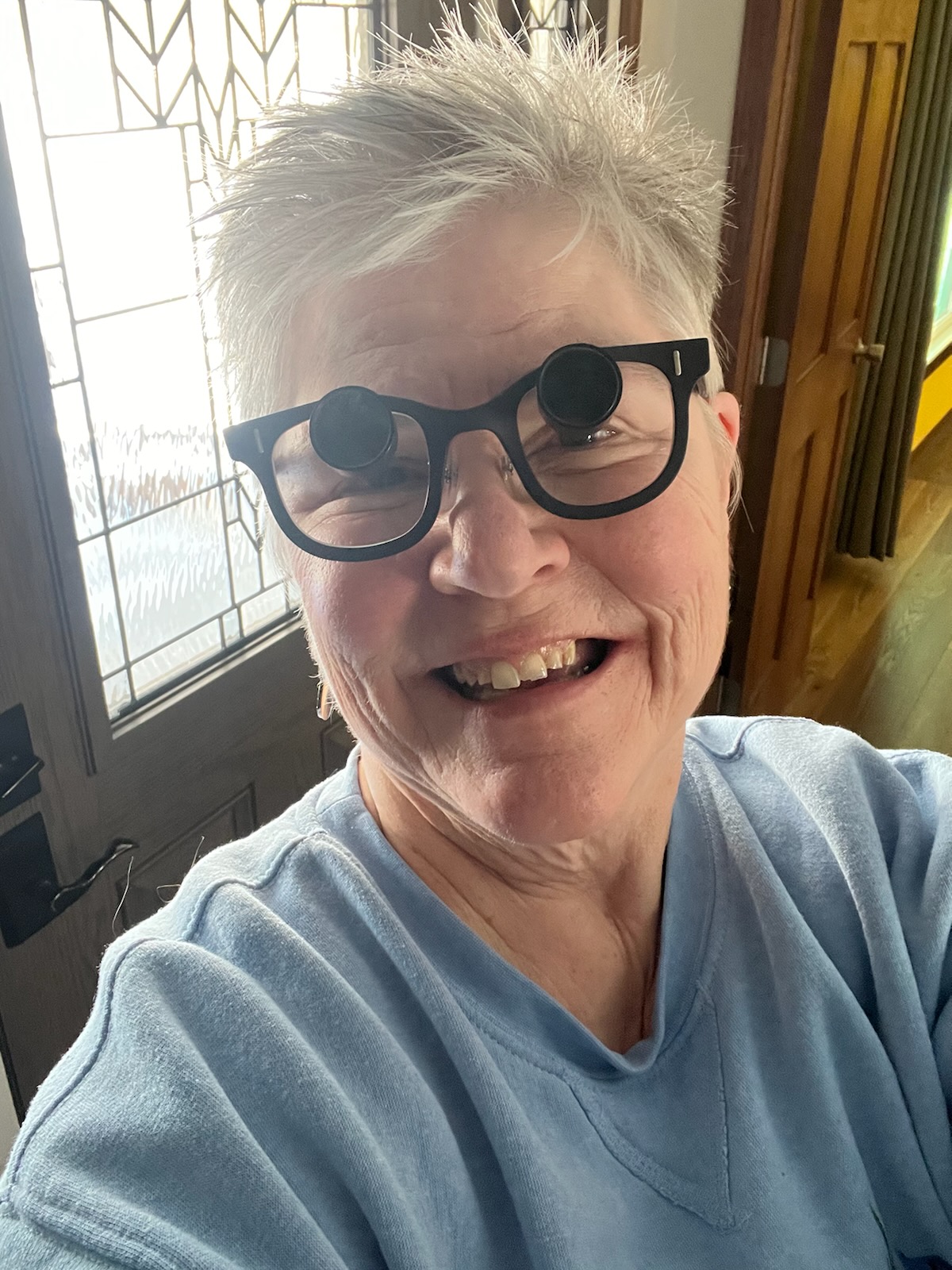
A bioptic telescope is a small telescopic lens mounted in a pair of glasses. The wearer looks through regular prescription lenses most of the time and tilts their head slightly to look through the telescope when they need to see something at a distance- like street signs, other vehicles, traffic lights, people, or the scenery.
"It's like a binocular that you're looking through," Cheryl explained. "You're looking through for a split second in time when you're driving. You're scanning an intersection, checking a traffic light, a traffic sign, pedestrians- whatever. It's just a split second, and then you're back to the carrier lens."
Bioptic telescopes have been used for decades. In fact, optometrist Dr. William Feinbloom began developing high-powered telescopic lenses in 1932, using an astronomer's telescope as a model. Today, they remain one of the most effective tools for helping people with low vision maintain independence- including legal driving in most U.S. states, including Minnesota and North Dakota.
Cheryl's Story: Seven Years Without Driving
Cheryl was born with optic nerve hypoplasia, a condition in which the optic nerve does not fully develop. She first received bioptic telescope glasses in 1991 and drove safely for 24 years. In 2015, she made the difficult decision to surrender her license when she felt her vision was no longer adequate.
"I knew I was not seeing what I needed to see," she said. "So, I surrendered my license, and there was a period of seven years that I didn't drive. I was doing rideshare, public transportation. It was hard."
After undergoing cataract surgery and receiving new intraocular lenses that corrected her astigmatism, Cheryl realized her distance vision had improved. She began searching online for an eye doctor who specialized in bioptic telescopes and found Dr. Chris Palmer at Low Vision Restoration in Minnesota.
"I was so scared because it was so important to me," Cheryl recalled. "I hadn't driven for seven years. I went in, and he is so wonderful. He really knows his stuff. After he gave me an eye exam, he determined that I did have the visual acuity with the bioptics to be able to drive in the state of North Dakota. I was just super, super excited."
What Dr. Palmer Does
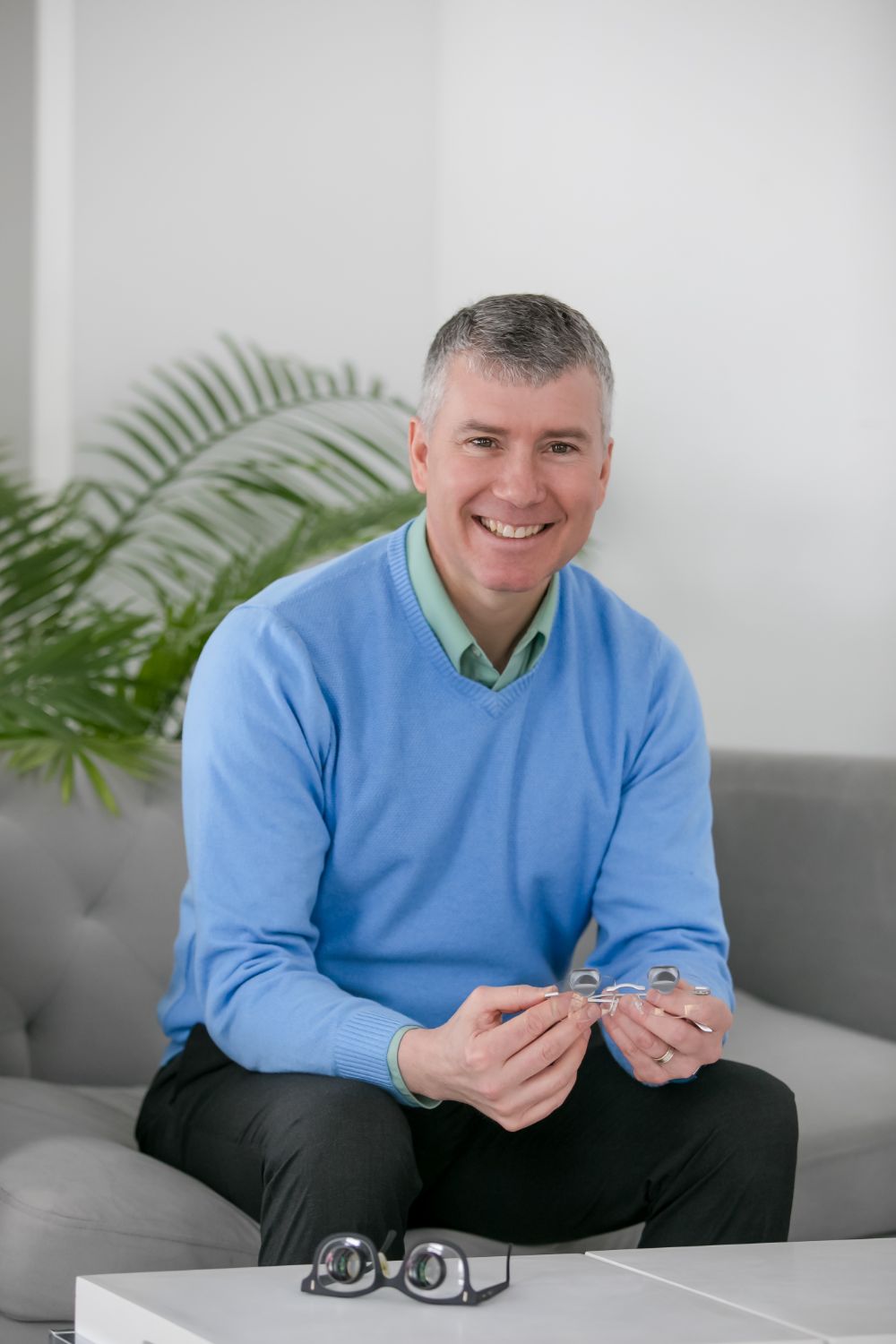
Dr. Chris Palmer is a low vision optometrist who specializes in prescribing custom glasses and specialty optics for people whose vision cannot be fully corrected with standard eyewear. At Low Vision Restoration, he conducts thorough evaluations focused on what patients want to accomplish- whether that's reading, using a computer, recognizing faces, or driving.
For patients interested in driving, Dr. Palmer assesses functional vision, prescribes appropriate bioptic telescope glasses when suitable, and completes the required documentation for state licensing agencies. He explains the process clearly and works with each patient individually.
Cheryl described him as "very friendly, down to earth, and easy to talk to. He's very confident and knowledgeable. He's just amazing."
Safe Driving with Low Vision
One of the biggest misconceptions about bioptic driving is that it puts others at risk. Cheryl wants people to understand that the opposite is often true.
"Bioptic drivers are the safest drivers," she said. "We realize that driving is not a right- it's a privilege. We know our limitations. People have this false idea that if you can't read that teeny, tiny bottom line on the eye chart, you shouldn't be driving. But in reality, when you're out on the roadway, there's nothing you need to see that's that small."
After receiving her new bioptic glasses from Dr. Palmer, Cheryl scheduled her permit test, passed, and then took a brief refresher with a driving instructor who had worked with her back in 1991. That instructor told her, "Cheryl, just go take your test. You're fine."
When Cheryl arrived at the DMV for her driving test, she looked the examiner in the eye and asked, "Do you have any questions for me?"
He said no.
When the test was over, he told her, "I just want to thank you for making my job easy. I wish everybody drove as well as you do."
A Message for Those on the Fence
For anyone unsure about whether low vision care could help them, Cheryl's advice is simple:
"You've got nothing to lose and everything to gain. If you can't drive right now and you go see Dr. Palmer and he says, 'Nope, sorry,' well, you lost nothing, but you tried. And it's so worth it."
She also wants people to know that many eye doctors may not be aware that bioptic telescopes exist. Before finding Dr. Palmer, Cheryl called multiple eye care offices in Fargo asking if they worked with bioptic telescopic lenses.
"Ninety-nine percent of the offices I called didn't know what I was talking about," she said. "I was shocked."
Low Vision Awareness Month
February is Low Vision Awareness Month, a time to educate the public about what low vision is, how it affects daily life, and what options are available. At Low Vision Restoration, Dr. Palmer helps patients across Minnesota and neighboring states understand their choices and take steps toward greater independence.
If you or someone you love is living with low vision, a free phone consultation can help determine whether an evaluation is appropriate. There is no pressure and no obligation- just honest answers and guidance.
Contact Information:
Low Vision Restoration, LLC
Dr. Chris Palmer, OD
Blaine, Minnesota
Phone: 612-729-3030
Website: LowVisionOfMN.com
Seeing patients in Coon Rapids and Inver Grove Heights, Minnesota.
Dr. Chris Palmer
Low Vision Restoration, LLC
+1 612-729-3030
drcpalmer@lowvisionofmn.com
Visit us on social media:
LinkedIn
Facebook
YouTube
X
Legal Disclaimer:
EIN Presswire provides this news content "as is" without warranty of any kind. We do not accept any responsibility or liability for the accuracy, content, images, videos, licenses, completeness, legality, or reliability of the information contained in this article. If you have any complaints or copyright issues related to this article, kindly contact the author above.
